Common Emergency Lighting Problems and How to Troubleshoot Them
1. The Emergency Light Doesn’t Operate During a Test
One of the most common issues found during routine testing is a fitting that simply doesn’t illuminate when the mains supply is interrupted.
Possible causes include:
• Failed or ageing battery
• Battery disconnected or incorrectly connected
• Faulty unit
• Charger failure
• Internal wiring fault
Start by checking that the battery of the manual test unit or self-test unit is correctly connected and inspect for any visible signs of damage. If required replace the battery or emergency light with a new one.
2. The Battery Doesn’t Last for the Full Emergency Duration
Emergency lighting should provide illumination for its rated duration, which is commonly three hours. This is the same for both manual and self-test units.
If the light switches on during testing but goes out before the expected duration, the battery is usually the first component to investigate.
Common causes include:
• Battery deterioration due to age
• Poor charging caused by mains supply issues
Replacing the battery will often restore performance, but it’s also worth checking that the fitting has had sufficient charging time following installation or previous testing.
%20(3).jpg)
3. The Emergency Light Doesn’t Charge
If the battery continually fails or the charge indicator isn’t showing correctly, the charging circuit may not be operating.
Check for:
• Permanent mains supply present
• Tripped circuit
• Loose wiring connections
• Faulty unit
Many charging faults can be traced back to supply issues rather than the fitting itself, so verifying the permanent live feed should always be one of the first checks.
4. Physical Damage to the Emergency Light
Routine inspections often reveal damaged or deteriorated fittings.
Common issues include:
• Water ingress
• Damaged housings
• Loose fixings
• Corrosion due to harsh environments
If the integrity of the fitting has been compromised, replacement is generally recommended rather than attempting a repair, particularly where ingress protection has been affected.
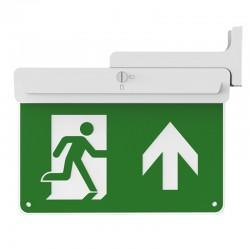
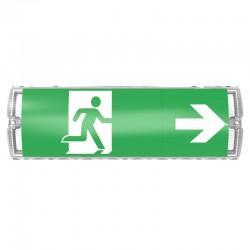
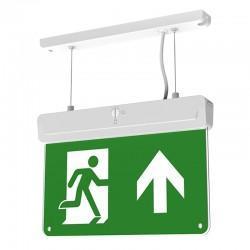
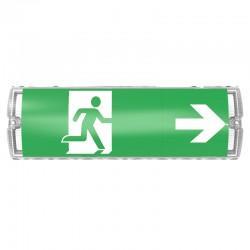
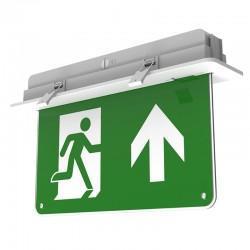
Replacement legends are available for blade and box type emergency lights.
%20(4).jpg)
5. Emergency Lighting Isn’t Installed in the Correct Locations
Not every emergency lighting issue is caused by a fault. Sometimes the problem is simply that there isn’t enough emergency lighting coverage.
Emergency lighting should be installed in the correct locations to provide adequate illumination. If fittings are poorly positioned, parts of the building may be left without sufficient light during a power failure, even if every emergency light is operating correctly.
Emergency downlights provide additional, focused lighting for open areas and corridors to aid safe movement on escape routes. These should be included in the regular testing and inspection schedule.
Routine Testing Is Essential
Regular testing is one of the simplest ways to identify faults in illuminated fire exit signs and fittings before they become serious.
Typical emergency lighting maintenance includes:
• Monthly functional test – A short test to confirm each fitting operates correctly when the mains supply is interrupted.
• Annual full-duration test – A complete discharge test, usually lasting three hours, to confirm the battery can sustain the fitting for its rated emergency duration.
Any faults identified during testing should be rectified promptly and maintenance records kept up to date.
%20(6).jpg)
Why Regular Escape Route Lighting Maintenance Matters
Emergency lighting isn’t something that can simply be installed and forgotten. Like any life safety system, it requires regular inspection and testing to ensure it will operate correctly when it’s needed most.
Routine maintenance helps identify failing batteries, damaged fittings, charging faults, and installation issues before they become a safety risk. Regular testing also helps maintain compliance with current fire safety and emergency lighting standards.
If you need support with your emergency lighting specification, installation, or existing system, our technical team are here to guide you to the right solution for your facility.
Contact us today or call on: 01305 263300.
You can also read more about types of emergency lighting, testing variations, and fixing kit options in our blog.









Comments