Most people walk past emergency lighting every day without ever noticing it.
Across many different buildings and environments, emergency lighting exists quietly in the background, seldom used or thought of.
However, when a power failure occurs, these lights instantly become one of the most important safety systems in any built environment.
Emergency lighting ensures that people can see clearly to safely exit a building during a mains power outage or emergency. Without it, escape routes could become dark and dangerous, creating confusion and increasing risk.
What is Emergency Exit Lighting?
Emergency lighting is a backup safety lighting system that automatically activates when the normal electrical supply fails.
Their main purpose is to provide sufficient illumination for occupants and users to locate exit routes and safely evacuate a building.
Emergency lighting is commonly installed in key areas such as:
- Corridors
- Stairwells
- Escape routes
- Fire exits
- Large open areas
- High-risk workspaces
Why Emergency Lighting is Important
During an emergency, lighting conditions can quickly become unsafe. Imagine a busy office building suddenly losing power. Corridors become dark, staircases are difficult to see, and people may panic while trying to find the nearest exit.
Emergency lighting prevents these situations by:
- Illuminating escape routes
- Highlighting exit doors
- Reducing panic during evacuation
- Allowing safe movement through the building
- Helping emergency services navigate the premises
By maintaining visibility during emergencies, emergency lighting helps reduce panic and guide people safely out of the building. They ensure that facilities remain safe even when normal lighting fails.
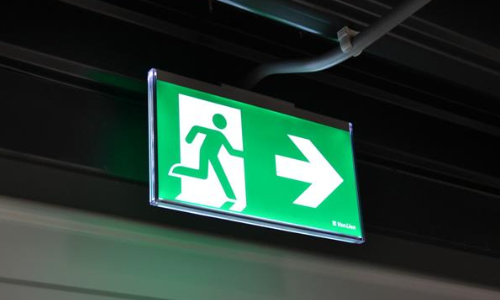
How Emergency Lighting Works
Emergency lighting systems operate using a simple but reliable mechanism.
Each unit contains a built-in battery or backup power source, allowing it to continue operating even when the mains electricity is lost. The rechargeable battery charges continuously while mains power is available.
The process works like this:
- The emergency light is connected to the building’s electrical supply.
- While power is available, the internal battery remains charged.
- If the power supply fails, the unit automatically detects the outage.
- The battery immediately powers the light, providing illumination.
Most emergency lighting systems are designed to operate for at least three hours, providing sufficient time for occupants to safely evacuate the building.
Once mains power is restored, the battery automatically begins recharging.
Types of Emergency Lighting
Different buildings require different types of emergency lighting. The most common options are detailed here.
Bulkhead Emergency Lights
Bulkhead lights are one of the most widely used emergency lighting solutions.
They are durable, versatile, and suitable for a wide range of environments, including corridors, stairwells, and industrial facilities.
Typical features include:
- Wall or ceiling mounting
- Strong, durable casing
- Long-lasting LED technology
- Maintained or non-maintained operation
Because they provide reliable illumination across large areas, bulkheads are commonly used along escape routes and general access areas.
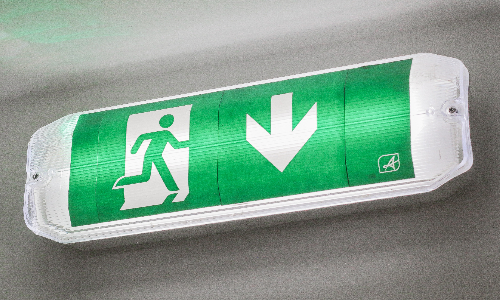
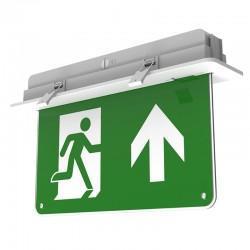
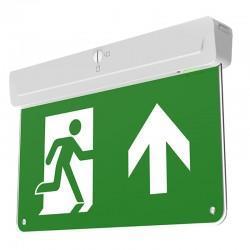
Blade Emergency Exit Signs
Blade emergency exit signs are designed to clearly indicate exit routes.
These lights feature a slim, double-sided illuminated sign, making them visible from multiple directions.
Blade lights are commonly installed in locations such as:
- Shopping centres
- Office buildings
- Airports
- Large public spaces
Their design makes them particularly effective in large open areas where visibility from several angles is required.
Emergency Box Lights
Emergency box lights are a compact and practical lighting solution frequently used in commercial buildings.
They are typically installed in areas such as:
- Offices
- Corridors
- Stairwells
- Small commercial spaces
Their simple design and reliable performance make them a popular choice for standard emergency lighting installations.
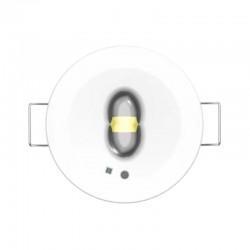
Emergency Recessed Downlights
Emergency recessed downlights are a discreet and modern emergency lighting solution designed to sit flush within ceilings. Unlike surface-mounted fittings, these lights are recessed into the ceiling cavity, making them ideal for buildings where aesthetics are important.
They are commonly used in environments such as:
- Offices
- Hotels
- Retail stores
- Reception areas
- Modern commercial interiors
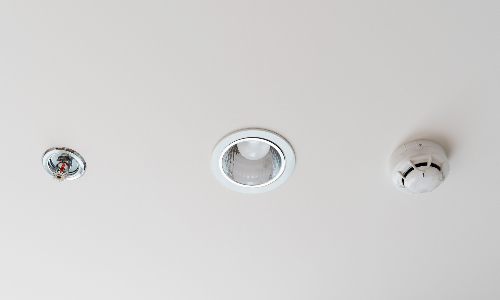
Emergency Lighting Mounting Accessories
Emergency lighting systems can be installed using a variety of mounting accessories, allowing them to fit different building designs and installation requirements.
Recessed Mounting Kits
Recessed mounting kits allow emergency lights to be installed flush within ceilings, creating a cleaner and more discreet appearance.
They are commonly used in:
- Offices
- Hotels
- Retail spaces
- Modern commercial interiors
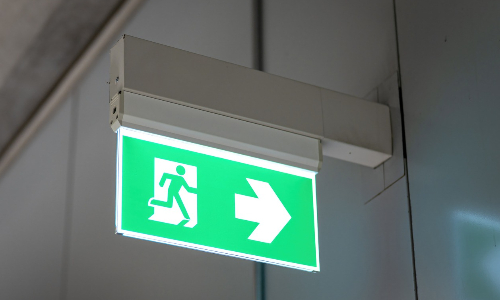
Flag Mounting Kits
Flag mounting kits allow emergency exit signs to be mounted perpendicular to a wall.
This makes the sign visible from both directions along a corridor, improving evacuation guidance during an emergency.
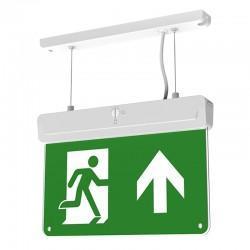
Hanging Kits
Hanging kits suspend emergency lights or exit signs from ceilings using rods or cables.
They are typically used in areas with high ceilings or large open spaces, including:
- Warehouses
- Atriums
- Large commercial buildings
Emergency Exit Legends and Escape Route Signs
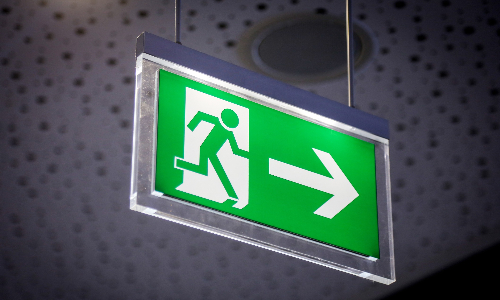
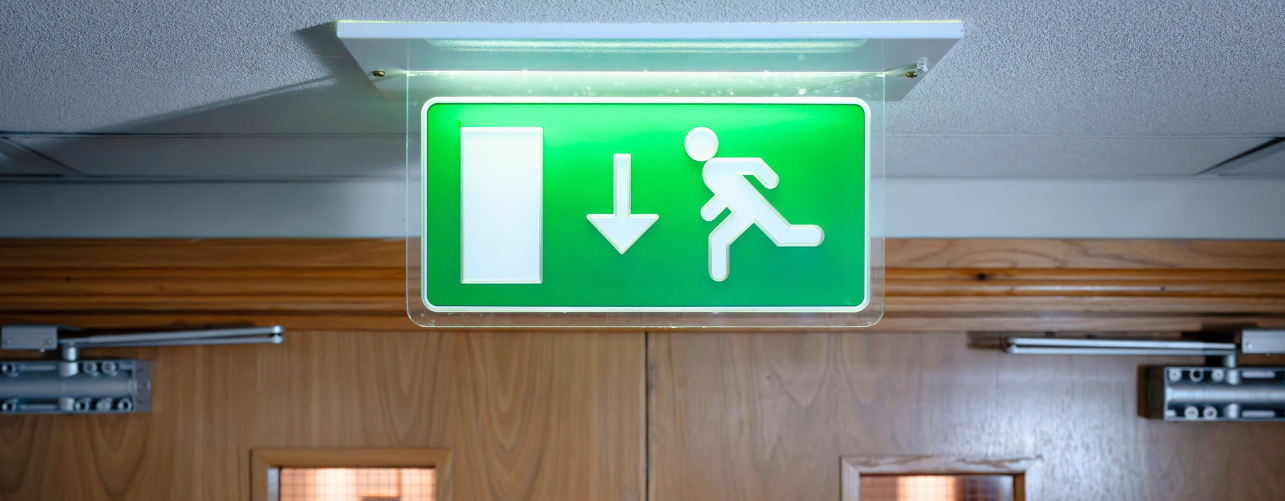
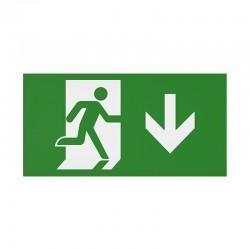
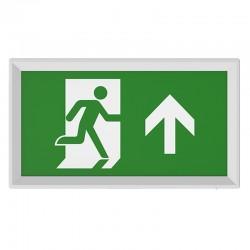
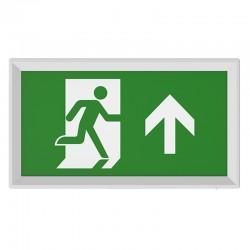
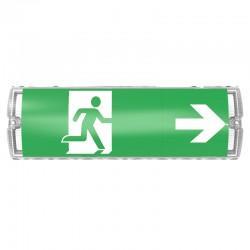
Emergency lighting systems often include exit legends, which are illuminated symbols that show the direction of the escape route.
Arrows are used to guide people toward the nearest exit.
Common directions include:
- Arrow left
- Arrow right
- Arrow up (straight ahead)
- Arrow down (exit directly below)
Correct placement of these signs is essential to ensure occupants can quickly understand the safest route out of the building during an emergency.
Manual Test vs Self-Test Emergency Lighting
Emergency lighting systems must be tested regularly to ensure they operate correctly when needed.
There are two main testing options – manual or self-test.
Manual Test Emergency Lights
Manual test emergency lights require a person to physically test the system using a key switch or test button.
During testing, the mains power is temporarily interrupted to confirm that the battery powers the light correctly.
Self-Test Emergency Lights
Self-test emergency lighting performs automatic routine checks without manual intervention.
These systems regularly monitor:
- Battery condition
- Lamp performance
- Charging status
If a fault is detected, the unit displays a visual warning indicator, allowing maintenance teams to quickly identify and fix the issue.
Self-testing systems are becoming increasingly popular because they reduce maintenance time and improve safety compliance.
Choosing the Right Emergency Lighting
Selecting the right emergency exit lighting system depends on several factors, including:
- Building layout
- Ceiling height
- Escape route design
- Environmental conditions
- Safety and compliance requirements
By combining different lighting types, mounting accessories, and exit signage, a complete system can be designed to provide clear evacuation guidance during power failures.
Emergency Lighting You Can Rely On
Emergency lighting plays a critical role in building safety. Although it often goes unnoticed during normal operation, it becomes essential the moment power is lost.
Having the correct system in place ensures that occupants can exit buildings safely, quickly, and with confidence during emergencies.
At Door Controls Direct, we supply a wide range of reliable emergency lighting solutions, including bulkheads, exit signs, spotlights, accessories, and mounting kits designed for professional installation and long-term performance.
If you’re unsure of what solution is required in your facility, contact our team today for guidance.







Comments