Meet Josh, our new Access Control Technical Manager at Door Controls Direct. With over a decade of hands-on experience and a passion for problem-solving, Josh brings both technical know-how and a people-first approach to everything he does. From hospitals to schools, his career has taken him into some of the UK’s most sensitive and complex environments, always with the same goal: creating safer, smarter, more secure spaces.
In this interview, Josh talks us through his journey from coffee runs and cable pulling to becoming a go-to expert in the field. He shares insight into the future of access control, the common pitfalls he helps clients avoid, and what excites him most about joining the Door Controls Direct team. Plus, a few fun facts you might not expect from a guy who can rewire a maglock and land a backflip in the same weekend.
Louise: Have you been working in the industry long?
Josh: Just over 10 years now. I started when I was 17, straight out of college.
Louise: Did you do any relevant training at college that led you into the job?
Josh: Not exactly. I studied engineering, but even before that I was always pulling things apart; remote control cars, toys, anything I could get my hands on. My mum hated it! But everyone said I’d end up as a mechanic or engineer, so it made sense to go into engineering after school. Then, a family friend asked if I wanted to help them run some cables. It felt familiar, similar to the practical side of engineering, so I gave it a go. I loved it instantly, and I’ve been in the industry ever since.
Louise: What was your first role like?
Josh: I was the coffee guy! Running cables, loading vans, basically doing all the jobs no one else wanted. I’d be in early making coffee for the team and out with the crew by 3 p.m. I really started from the bottom, but I just kept learning. About a year in, the director handed me the keys and said, “Go make us some money.” That was my turning point. It all built up from there.
Louise: And how did you get into access control specifically?
Josh: Completely by chance. It was just before the six-week school holidays, a busy time for installs since the buildings are empty. They had loads of jobs booked and only two engineers doing access control, so they asked me to jump in and help. It was supposed to be just a week or two before I looked for an engineering role. But then I was offered a permanent position, and I never looked back.
Louise: That’s brilliant. So now, 10 years in, what’s been your most challenging or rewarding project?
Josh: The most challenging part is adapting to such a variety of environments. I’ve worked everywhere from psychiatric hospitals and intensive care units during COVID, to nurseries, schools, and dementia wards. One day you’re on a building site having a laugh, the next you're in a nursery where everything needs to be spotless and safe.
As for rewarding, definitely seeing the real-world impact. Like in hospitals, we installed intercom systems in ICU rooms so staff didn’t have to put on hazmat suits every time they needed to speak with a patient. In schools, we added fencing and access control to protect children. In care homes, we stopped residents from accessing dangerous areas like stairwells. Knowing our work genuinely helps keep people safe, that’s the most fulfilling part.
.jpg)
Louise: Sounds like you’re not just about the installation, but really invested in the bigger picture.
Josh: Exactly. That’s what I love most, understanding the setting, the people, and what they actually need. When a customer says they want “access control,” they often don’t know the specifics. Do they need something simple? High holding force? Different access levels? I always try to get a full picture so we can tailor a system that suits their actual goals.
Louise: What’s a common mistake you see in the industry?
Josh: Poor specifications or bad installs, people fitting systems that aren’t right for the setting. Sometimes it’s because no one even visited the site. They just reused an old quote or guessed. But every site is different. The door, the environment, even the people using it, these things all matter.
Louise: Like in hospitals where things like trolley clearance can be an issue?
Josh: Exactly. You might be able to physically fit the magnet, but if linen trolleys are constantly coming through, you need proper brackets and clearance. It’s not just about putting a product in, it’s about making sure it fits the purpose and the day-to-day use.
Louise: Do you have a favourite product to work with?
Josh: I wouldn’t say I have one absolute favourite, I love trying out new products. But I’m really comfortable with Paxton because I’ve fitted it for 10 years. You get to know the boundaries, what works well and where. It’s reliable, familiar, and it suits a huge range of sites from schools to hospitals. That said, I always try to stay current and test out new technologies.
Louise: Can you give an example of something new you’ve worked with?
Josh: Definitely. We do a lot of work on remote homes with gates set far from the house, so running cables isn’t ideal. I found a wireless intercom system from Intertone, audio, video, remote unlocking, and it fit the bill perfectly. Once I tested it and liked it, I started recommending it more.
Louise: When it comes to technical issues or troubleshooting, what’s your approach?
Josh: I kind of run through an imaginary flowchart in my head. First, I try to understand the system, what manufacturer, what kind of locks, buttons, power supplies. Then I ask questions: What’s the issue? What does or doesn’t work?
From there, it’s step by step. Is the lock getting power? No? Has the break glass been activated? No? Then what’s next? I walk through it logically. Sometimes it’s a simple fix like a tripped fire alarm or a faulty maglock. Other times it’s down to wiring or installation error. But breaking it down makes it manageable, not just for me, but for the customer too.
Louise: That’s a great way to make things less stressful for people.
Josh: Exactly. They don’t need to know all the technical bits, just tell me what you want the system to do, and I’ll figure out the best way to get there.
Louise: What can customers expect when they come to you with a technical query?
Josh: The first thing is confidence. I want customers to feel reassured that they’re speaking to someone who knows the products and knows how to install them. That confidence helps them trust that their issue is going to be resolved.
Clear communication is just as important. It’s easy to overload people with technical terms, but that can be overwhelming. I keep it simple and talk through things clearly so they understand without feeling lost in jargon.
There’s also a human side. If someone’s door isn’t locking in a vulnerable area, like a nursery, of course they’re going to panic. That’s a security issue. So it’s about slowing the situation down, showing a bit of compassion, and helping them feel calm and supported. If I can talk them through it step by step, with patience and reassurance, that really helps build trust. They know I’ll get to the bottom of it and that I genuinely want to help.
Louise: That patience and understanding really seems like a key part of your approach.
Josh: Definitely. The customer doesn’t need to know everything, that’s my job. I’ll guide them through it and make sure we get the issue sorted properly.
.jpg)
Louise: What advice would you give to someone specifying a system?
Josh: Start with a full overview of the system and don’t skip the small details. One of the most important things is understanding the door you’re working with. You could specify the best lock or access system in the world, but if the door isn’t suitable, it all falls apart.
Understanding the product range is also essential. You need to be confident that what you’re specifying is going to meet the customer's needs and that it’s fit for the environment. That means knowing both the system and the situation inside and out.
Louise: How do you stay up to date with changes in the industry, whether that’s products or evolving standards?
Josh: Being in an NSI Gold-accredited company helps a lot. We get regular updates from NSI about changes in standards or compliance requirements. When those come in, I make sure they’re passed on internally so the team can stay informed.
I also keep an eye on updates to British Standards and do training courses, especially when manufacturers bring out new products. Often during training sessions or product demos, you’ll hear, “Did you know this change is coming in six months?” That kind of conversation is really valuable. Take something like Martyn’s Law, sometimes you’ll hear about these changes from customers before you hear them from official bodies. Staying in touch with customers keeps you aware of what's coming next.
Louise: So just staying open to conversation?
Josh: Exactly. Talking to customers, listening to what they’re asking for, and then going away to research it yourself. You might find that a certain system isn’t suitable because of escape routes or door design. But you only discover that through proper dialogue.
Louise: Trade shows must help with that too?
Josh: Massively. Trade shows are one of my favourite ways to stay current. You get to see what’s new, what’s coming, and actually speak to the people behind the products. I enjoy going to the Security Event at NEC Birmingham and IFSEC at Excel in London. They’re great for catching up with manufacturers or speaking to reps from companies. You learn so much just from those conversations.
Louise: And it’s not just access control you’re looking at?
Josh: No, it’s the full scope, CCTV, fire, security, all of it. Those big shows bring everyone together in one place, which makes it much easier to keep a finger on the pulse of the industry. It’s a full day out, but well worth it.
Louise: What do you think you’ll enjoy most about stepping into a technical support role?
Josh: Honestly, using my knowledge and experience to help the business grow and to support everyone within the team. There are so many parts of the company that could benefit from the experience I’ve gained over the years.
For example, the sales team. If I can help build their confidence and deepen their understanding of the products, they’ll be in a much better position when those more complex enquiries come in. I want them to feel like they can say, “Yeah, I know exactly what that product does, and here’s what it can and can’t do.” That kind of support doesn’t just improve individual performance, it lifts the whole business.
Louise: It makes such a difference to have someone who’s been on the tools, who gets it, and who can explain things in a way that actually makes sense. It’s one thing to read a spec sheet, but quite another to have someone talk you through it, answer your follow-up questions, and help you grow your own confidence.
Josh: Exactly. Everyone learns differently, and it’s easy to feel lost when you’re new or unsure. But when you’ve got someone you can turn to for advice, someone who can explain things clearly and without jargon, that’s huge. Especially with so many new team members, I think it helps to have someone there who can say, “Here’s how it works,” and take the stress out of it. That reliability builds confidence. It creates a better experience for our team and for our customers.
Louise: And that helps you build trust with the customer too.
Josh: Absolutely. Take a small electrical contractor, for example. They might only do a few access control jobs a year, so when they call and ask, “Do you sell fire-rated maglocks?” they want clear, quick, confident answers. If we can say, “Yes, here are your options, this one is fire-rated, this one’s not,” that builds confidence. They think, “They know what they’re talking about. I’ll come back to them again.” That’s how you build relationships, through trust and helpful advice.
.jpg)
Louise: And even taking it a step further, advising on practical considerations like headroom, bracket fitting, or door type. Those extra touches show experience and make a real difference.
Josh: Exactly. It’s not just “Here’s the product,” it’s, “Here’s something you might want to think about.” That’s what adds value.
Louise: So, what’s one tool or piece of kit you couldn’t live without?
Josh: It might not be what people expect, but for me, it’s my laptop. It’s essential for fault finding, programming, and staying up to date with firmware. Manufacturers are always pushing updates, so we might go back to a school four years later and find it’s running an outdated version. Having my laptop means I can update the system on-site as part of the service. It’s about being efficient and making sure everything is running as it should be.
Louise: That makes a lot of sense. I wouldn’t have guessed laptop at first, most people probably think spanners or testers, but it’s true. It’s like modern mechanics. First thing they do is plug the car into the computer to get the fault readout.
Josh: Exactly. Same principle. You can try and guess, or you can plug in and know for sure. It’s always been my go-to.
Louise: What do you see for the future of access control over the next five years?
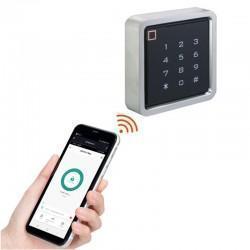
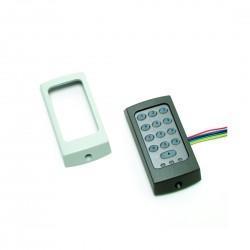
Josh: I think we’ll see a big shift toward network-based systems and mobile credentials. More and more, people want remote access to their sites. Right now, we do a lot of smaller standalone systems, things like keypads or basic proximity readers. But the direction we’re heading in is definitely phone-based credentials and fully networked solutions.
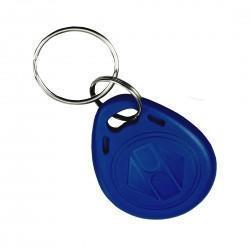
People don’t really want to carry keys anymore. For example, in my previous job we were working at a school where students kept losing their fobs. They’d come back saying they’d lost it again, and they didn’t have keys at home either. So we ended up using small coin-sized fobs that could slide behind their phone cases. Every student had their phone on them all the time, so it just made sense.
That kind of scenario really shows where things are going. Phones are the one thing people never leave behind. So being able to walk up to a gate or door and unlock it with your phone is definitely going to become more normal. It already contains your identity, your credentials, and all your access info. It just makes sense.
Louise: And how do you see AI playing a role in all this?
Josh: AI will change how we manage and monitor access events. Right now, if a hospital wants to check who went through a certain door at a certain time, someone has to manually scroll through event logs. That takes ages.
With AI, we could search more efficiently. You’d just enter a name or credential, and it would pull up the relevant data instantly. It could also flag unusual behaviour. For example, if someone usually enters through one route and suddenly starts using a different one, the system could detect that as a potential issue. Or if someone couldn’t have physically moved between two doors that fast, it could flag a potential credential misuse.
That’s especially important for sensitive sites like hospitals or places like Hinkley Point. There, specific people are only allowed in certain areas. AI can help monitor that in a way that’s far more efficient than manual checks.
Louise: It’s fascinating how closely this aligns with shifts in lifestyle and habits too.
Josh: Exactly. Look at Airbnb’s. You get a long set of instructions, go to a key box, enter a code, and hope the keys are there. But if you lose them or forget the code, the whole booking falls apart. Now imagine just getting a link sent to your phone. You arrive, hold your phone up to the door, and it grants access only for your booking period. After that, access is revoked automatically.
That approach would be great not just for holiday lets, but for hotels, offices, and even homes. People want simplicity, and they already use their phones to pay for everything from fuel to takeaways. It’s all heading in that direction.
.jpg)
Louise: Is that what excites you most about the future of access control?
Josh: Yeah, definitely. The integration of phones into everyday access is the part I’m most excited about. Everyone carries one. No one really uses physical bank cards anymore because they’ve got everything stored on their phone. It’s becoming your one-stop solution for payments, ID, access, and more. I think access control is going to have to keep up with that shift.
Louise: There’s still a concern though, right? About lost phones or power issues?
Josh: Yes, definitely. I saw a stat recently that around 78,000 phones are stolen every year in the UK. And if you lose your phone and everything is on there, that’s a big issue. The convenience is great, but it does mean we need good fallback options and system management processes for when things go wrong.
Even personally, we’ve had people get stuck when their phone dies and they can’t call a taxi or get into a hotel. It’s something we’ll have to consider as the tech becomes more dominant.
Louise: Do you think physical keys will ever be completely phased out?
Josh: That’s a tricky one. I think we’ll see a steady decline in master key systems, especially in larger organisations like hospitals. For example, I worked on a hospital where the system automatically denies access if someone hasn’t badged in for three months. That’s so much easier, and more secure, than relying on physical keys. If someone loses a key, the entire site is potentially compromised. With access control, permissions can be revoked instantly, with no need to change locks or reissue keys.
Still, I don’t think keys will disappear entirely. Some people are hesitant to adopt new tech. They worry about phones being lost, credentials being stolen, or what happens during a power outage. And there are certain places, like historic buildings, churches, or listed properties, where you can’t make major upgrades, or where the traditional key look still matters.
Louise: So do you see hybrid systems being the future?
Josh: Exactly. A mix of digital and traditional. You might have a key box for the front door of a community space like a church, but everything inside could run on fobs or restricted access credentials. That way you’re not compromising the security of the whole site.
Take doctors’ surgeries. The cleaner might have access through the main door, but not to finance, consultation rooms, or the drug safe. With access control, that’s easy to manage. With keys, you’re handing over a big bunch and hoping for the best. So I think that flexibility, having both simple and complex options within the same system, is the future.
Louise: And there’s also the issue of former employees or tenants holding onto keys.
Josh: Yes, and we’ve seen it. People leave on bad terms and take their keys with them. That can force a full re-keying of the building. With access control, you just deny access immediately.
So while keys won’t disappear overnight, their role will shrink, especially in larger and more security-conscious environments. I think we’ll always have a need for them, but that need will become smaller and more situational.
Louise: What drew you to Door Controls Direct?
Josh: It was just how welcoming and friendly everyone was. The first time I came in to meet Dan, I’d seen him before on other sites, but the atmosphere straight away was warm and inviting. Then I came in to sit with the directors for a chat, and again, everyone was just so polite and open. I remember thinking, "Yeah, this feels like the right place to be."
.jpg)
Louise: So you were aware of us before through your previous role?
Josh: Yeah, I’d been going into Spillers in Yeovil for years, but I never really realised how extensive your access control range was. In the past, if I needed something, I’d always go to the same person because of the relationship. I was speaking to Mike the other day about how sometimes it wasn't even about price anymore, it was just, pick up the phone, have a chat, place the order. I didn’t really look around because I was used to that routine.
Coming here made me realise just how much you offer. That opened my eyes to the potential. It’s made me think about how we can build those relationships here too, and how I can help people better understand what we do and what we can offer.
Louise: So it’s the potential that drew you in?
Josh: Exactly. There’s a lot of potential here, and seeing how much effort the business is putting into growing that area, I wanted to be part of it. Having someone technical on hand makes a huge difference to customers. It’s that gap I’ve noticed in the market—sometimes you wait ages to hear back from someone on a technical question. But if you’ve got someone here ready to pick up the phone and talk you through it, that’s a huge advantage. It helps build trust and long-term relationships.
Louise: That personal touch really makes a difference.
Josh: Definitely. I had someone call me the other day, Harry. I’d helped him with a product recommendation, and a few days later he rang back asking for advice on fitting and wiring. That kind of follow-up is how you build trust and repeat business. He said he’s got loads of jobs coming up and will definitely be coming back.
Louise: What do you get up to on weekends?
Josh: Mainly football and family time. Me and Gary have talked about this, I’m usually out on bike rides with the boys. As soon as I pick them up, we’re off exploring somewhere. It’s very kid-focused and I wouldn’t have it any other way.
Louise: What’s the best piece of advice you’ve ever received?
Josh: Don’t be afraid to step out of your comfort zone. It’s easy to settle in a routine and get comfortable, but that doesn’t always help you grow. I was offered more money to stay in my old role, but I knew I needed to move on if I wanted to progress. Reading that advice gave me the push I needed.
Louise: Was it something you read or something someone told you?
Josh: It was something I read, but it really stuck with me. I’d been feeling stuck for a while, frustrated that I wasn’t progressing. That advice helped me take the leap. It changed a lot for me, personally and professionally.
Louise: What’s your biggest achievement, work or personal?
Josh: Personally, it’s got to be my family, my wife and kids. That’s the thing I’m most proud of. Professionally, I’ve hit some great goals too, but nothing tops building that family.
Louise: How would your friends and family describe you?
Josh: I actually asked my mate John. He said I’m selfless, caring, funny, and hardworking. He said I always put others first, even if I’ve got stuff to do, I’ll drop it to help someone else. I think that’s just how I’m wired.
Louise: Tell us a fun or surprising fact about you.
Josh: I can do a backflip. Bit random, I know. I learned it in Year 6 for a school performance. I got the gymnastics coach to teach me. Didn’t do it for years, then randomly tried it in the garden with the kids and nailed it. They loved it.
Louise: If you weren’t in this industry, what would you be doing?
Josh: Probably something mechanical or engineering-related. I’ve always loved fixing cars, even if I didn’t make any money doing it. That hands-on work has always appealed to me.
Quickfire
Favourite type of access control system to work on?
Network-based systems
Maglock or electric strike?
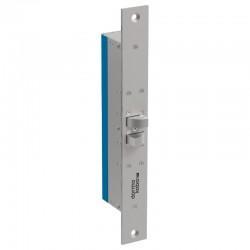
Electric strike
Hardwired or wireless?
Hardwired
Go-to first fault to check when a door won’t lock?
Break glass unit
Mobile credentials – future or overhyped?
Future
Favourite piece of door hardware?
Escutcheon
Josh’s mix of deep technical understanding, real-world experience, and down-to-earth communication makes him an incredible asset to our team, and to our customers. Whether it’s advising on product specs, troubleshooting an install, or helping a contractor feel more confident in their setup, Josh brings clarity and care to every interaction.
We’re excited to have him onboard as we continue to grow and evolve our technical offering. If you haven’t already spoken with him, chances are you will soon, and when you do, you’ll see exactly why we’re so glad he’s here.









Comments