In commercial buildings that may have multi-use spaces or be multi-occupancy, the use of physical keys is inconvenient at best, insecure at worst. Fitting a keyless door lock to access doors or gates ensures that there is no risk of users losing keys.
When it comes to choosing the right type of combination lock, there are a number of factors that impact model selection. This guide discusses the main factors you should consider when selecting a push button lock for your door or gate.
Keypad door locks offer different types of locking. Whether this is differences in mechanism, entry method, locking or latching, security level, or application. Here we’ll take you through the key aspects to factor into your choice of lock.
Level of security for keyless locks
There is always a balance to be struck between ease of access and effective security with any built environment and any locking system. Mechanical or electronic keyless door locks have models to suit both low and higher security areas.
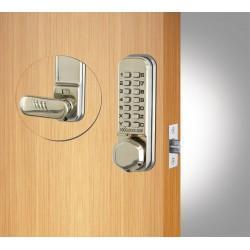
Lower security areas, such as store doors, may require a simple keypad and tubular latch to secure them, like the ARRONE AR195 code lock.
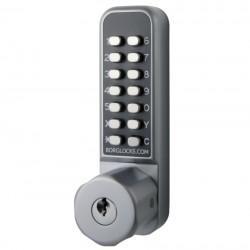
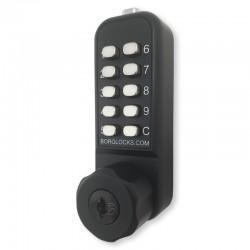
Doors to areas with a high security requirement would be better suited to a mechanical digital lock with anti-thrust latch and key override function, such as the Borg BL5701 Easicode Pro.
Volume and frequency of traffic
Consideration to the level of traffic a door is likely to have is a must when selecting a mechanical digital lock.
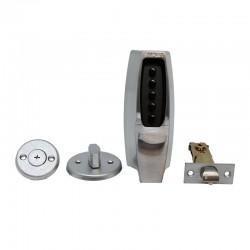
For heavy use and medium use doors, a lever operated mechanical digital lock, such as the Kaba L1021 will provide a good level of durability and give facilities managers the option to leave the door in passage mode, allowing free access for all users if required.
Where low use is expected, mechanical digital locks such as the Codelocks CL155 are a cost effective and easy to fit option that will provide reliable use for doors such as cupboards or store rooms.
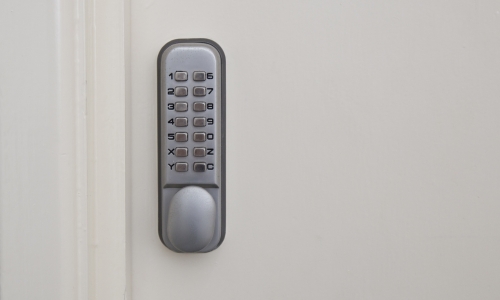
Internal or external combination door locks
Digital locks can be used on more than internal storage rooms or office doors. Certain combination locks can be fitted both internally and externally.
Some locks require a rain shield to prolong the life of the product. Others are built for long term use in exposed areas. Check models for salt spray testing, anti-corrosive finishes, and stainless steel buttons.
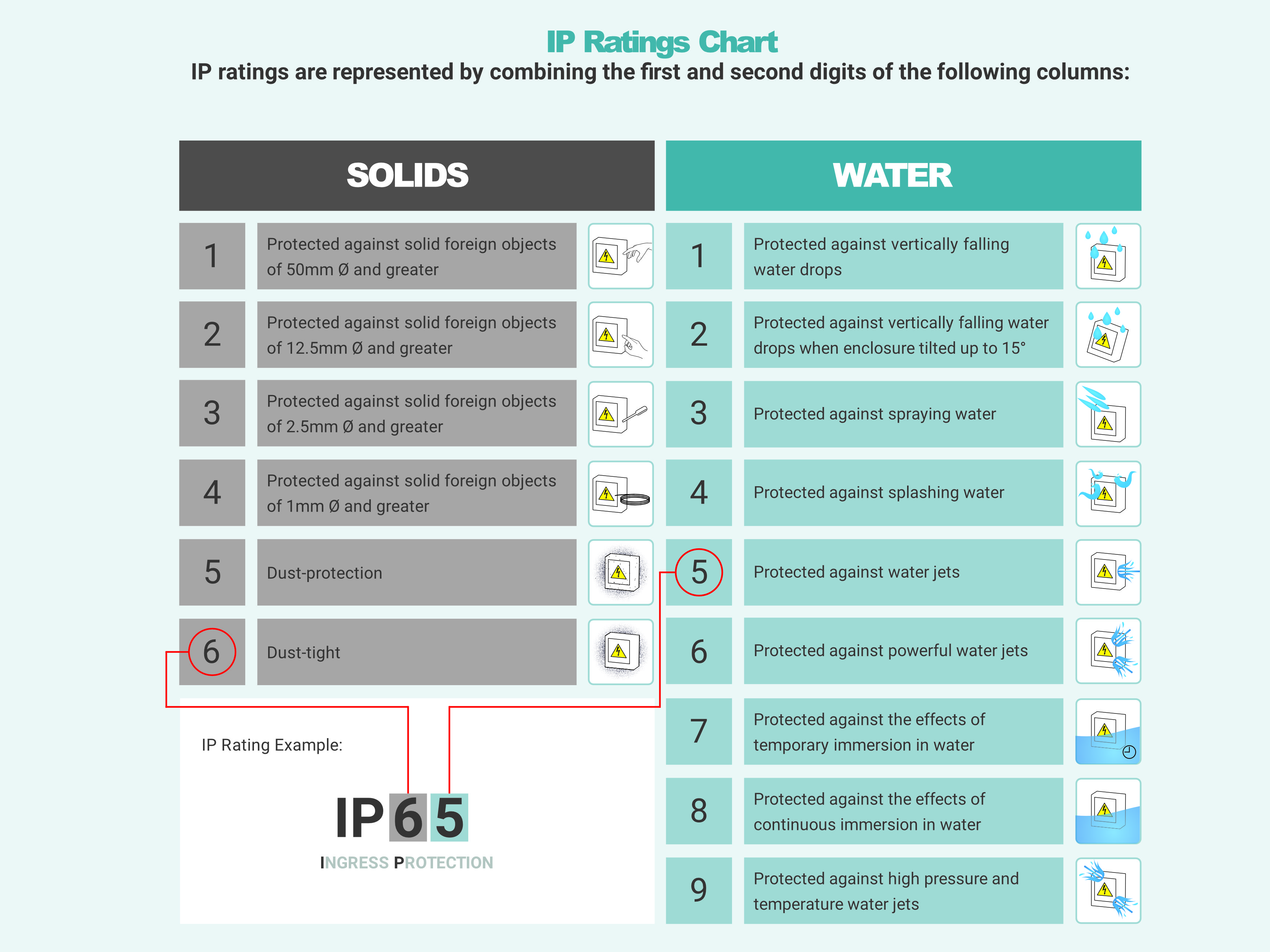
Another good indicator of suitability for internal or external use is the IP rating of a product. The chart below explains the meaning of the IP rating digits.
Frequency of keypad code changes
If fitting a digital lock to a door in a secure area or to a door with many different users, the code may need to be changed on a regular basis to retain required levels of security.
In multi-occupancy buildings or businesses which have frequent visitors, it is ideal to change the code on a daily, weekly, or monthly basis; so selecting a product that offers code change without removing the digital lock from the door is a real bonus. Models like the Borg Easicode Pro range include a quick code system allowing a code change within seconds.
Additional functions for your digital door lock
Additional key features and functions of digital locks include:
- Key override
- Non-sequential coding
- Holdback
- Passage function or code free option
- Anti-thrust pins
- Free internal egress
- Anti-tamper clutch mechanism
- Vandal-resistant models
- Compatible with panic hardware
- Service codes
- Different user code levels for restricted access
Lever handle or knob operation?
If a door is in a low traffic area, such as a store door, then a digital lock like the Codelocks CL160 can be fitted, which is operated by a knob and is suitable for light to medium duty use.
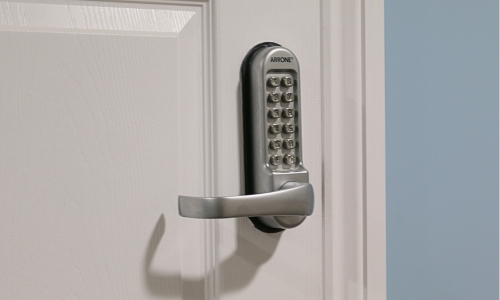
Lever handles are generally accepted as easier to operate than a knob. Consider these for doors with a higher volume of traffic.
Most knob operated digital locks are not handed, but handing can come into play with lever operated models. Make sure to check the handing of your door, or if the lock mechanism is reversible.
Options for digital lock access
Mechanical digital locks can secure or gate in a variety of ways. The locking mechanism the keypad connects to can vary, plus elements of the keypad itself.
Locking types:
- Mortice latch
- Mortice lock
- Rim deadlock
- Slam lock
- Multipoint lock
Other locking options include:
- Adjustable or fixed latch backsets
- Single or double sided code entry
- Number of code combinations
- Differing code lengths
- Keyed alike cylinders (key override function)
Digital locks with key override can have a variety of interchangeable/replaceable cylinder options like euro, threaded, or Best. Alternatively, they have an integral cylinder within the handle, which cannot be changed. If digital locks are required to be operated by your master key system, ensure you select a lock with a replaceable cylinder.
Non-locking considerations
Once you have narrowed down the choice of lock, you’ll need to know what it is being fitted to, and where.
Wherever you’re installing a digital lock, take into account the following:
- Door material - timber, aluminium, composite, UPVC, or glass
- Door thickness - for spindle and fixing length
- Door or gate - back to back keypads could be required for security
- Fire rating - read more on this below
Once you have assessed what the lock is being fitted to, it’s time to think about the location:
- Environment - is a marine grade finish required?
- Indoor or outdoor installation - is a tamper resistant lock needed?
- Escape door - is free egress from inside a must?
Fire rated digital locks
Do you need to have code access to a fire control or fire escape door?
Options of mechanical digital locks are available for use on fire escape doors with panic escape hardware. In this instance, it is imperative that the mechanical digital lock has been fully tested with the panic hardware it is to be fitted with.
The Briton 9260 is a mechanical digital outside access device (OAD) which is suitable for use with many of the Briton range of panic hardware, allowing for single action egress internally whilst providing easy code access externally.
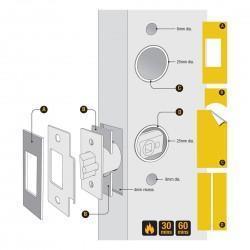
If fitting a mechanical digital lock to a fire control door, the fitting of an intumescent kit is a must to retain compliance. There are a number of manufacturers who offer intumescent kits to be used with their locks when fitting to 30-minute and 60-minute fire rated doors.
Digital door locks explained
Functions, finish, locking mechanisms, combined with the door material, location, plus fire rating, duty of use - it’s a lot to consider. However, working through all of these factors will lead you to a suitable code lock for your built environment.
If you would prefer to discuss your project or facility with our team, you can contact us, and we’ll guide you to the right solution.
Originally posted on 01.04.2020. Updated 15.04.2026.





Comments